
For many Disney fans, The Little Mermaid is remembered for its music, colour, romance and underwater feast for the eyes But beneath the sparkle, one of the reasons the film still connects so strongly is much more personal: the strained, emotional relationship between Ariel and her father, King Triton.
Their conflict is not simply “strict parent versus rebellious teenager”. It feels more truthful than that. Triton is protective, powerful and terrified of losing his daughter. Ariel is curious, passionate and desperate to be understood. Neither character is purely wrong, which is what makes their story so memorable.
It's funny, because I can remember similar conflict with my parents as a teenager (minus the tail and cute fish sidekick!) - but as a mother with teenage children now - suddenly, I get it....!
For collectors, this emotional tension is part of what gives Ariel and Triton pieces their appeal. A figurine is not just showing two characters from The Little Mermaid; it can capture a whole family story in one display. Whether you collect Ariel as a mermaid, Ariel in transformation moments, or father-and-daughter scenes, understanding their relationship adds another dimension to the way these pieces are viewed - but more than that; how they make you feel.
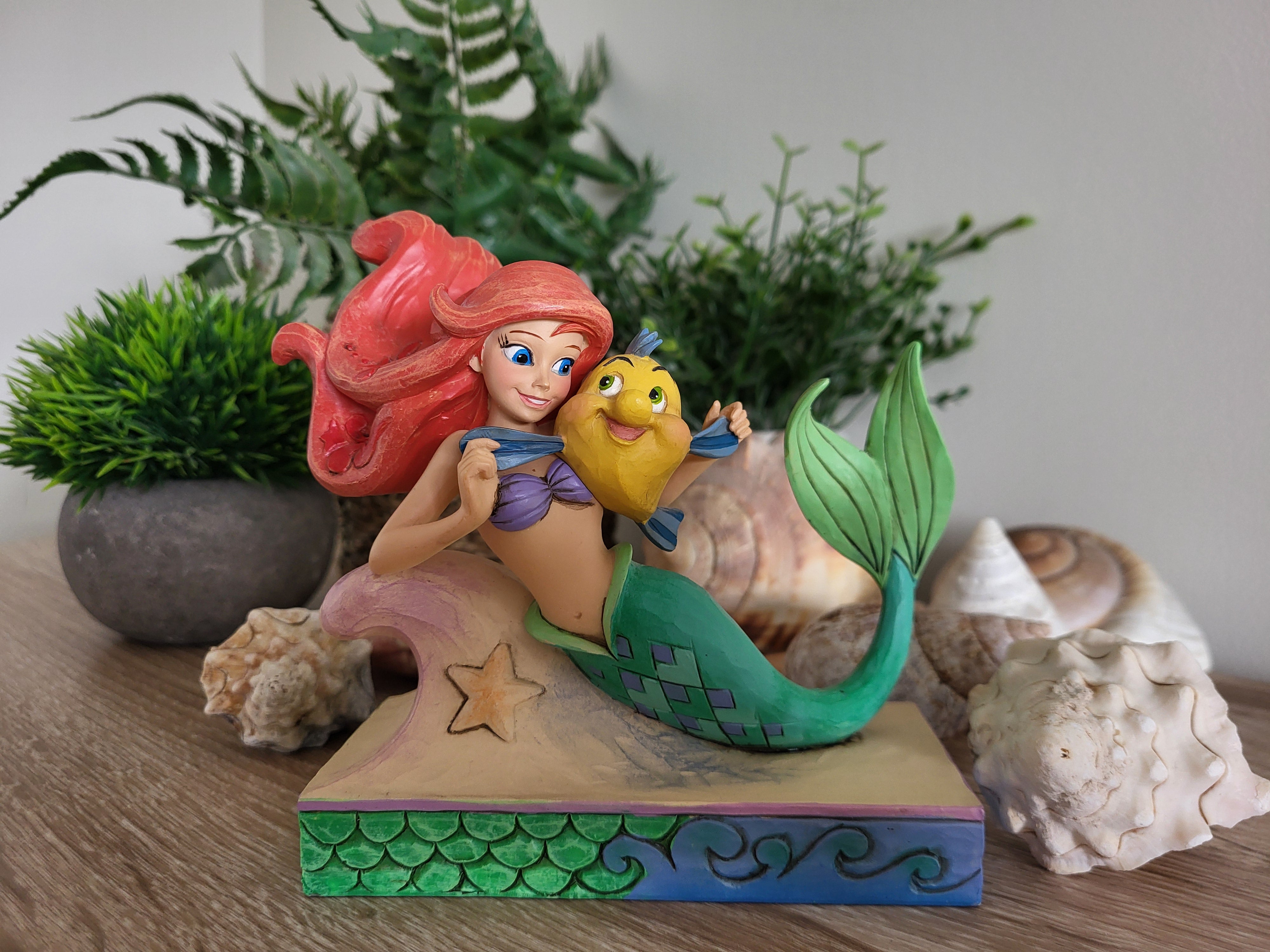
Ariel Is Not Just Rebellious — She Wants to Be Heard
Ariel is often described as adventurous, impulsive or headstrong, and don't get me wrong, I don't disagree. But her conflict with Triton begins somewhere much deeper. She feels pulled towards a world that fascinates her, even though everyone around her tells her it is dangerous, foolish or forbidden (we have all been there, right?! Feels so right because it is wrong!).
Her collection of human objects is not just a hobby. It's Ariel's way of expressing her identity. Ariel is trying to understand something beyond the world she was born into. She does not have the language to explain it properly to her father, and Triton does not have the patience, at first, to listen.....or probably more accurately - the poor chap is simply scared!
That is why the conflict still feels real. Many people recognise the feeling of being young, passionate about something, and dismissed by someone older who thinks they know better. Ariel is not simply chasing Prince Eric. Her fascination with the human world exists way before she even meets him! That makes her story much more interesting than a straightforward romance.
For collectors, this is one reason Ariel remains such a strong character to display. Pieces that show her as a mermaid often reflect that earlier version of Ariel: curious, restless and caught between where she is and where she longs to be. A collection of Ariel as a mermaid figurines can feel especially connected to this part of her story - and for me, takes me back to my teenage years with fondness.
King Triton’s Anger Comes From Fear
King Triton can seem harsh, especially during the moments when he loses his temper. He is a ruler, a father and a figure of enormous authority. When he speaks, the ocean listens. But Ariel does not always respond to him as a king. She responds to him as her father.
Cue: The emotional tension!
Triton is not afraid because Ariel likes collecting human things. He is afraid because the human world represents danger, loss and the unknown. To him, Ariel’s curiosity is not harmless. It is a threat to her safety and to the order he believes keeps his family protected. Let's take a moment to remember - single father - 7 daughters - a kingdom to rule - can we take a moment of sympathy for poor KT!
The tragedy is that his fear makes him controlling. Instead of asking Ariel why the human world matters to her, he tries to shut the conversation down. In doing so, he pushes her further away. Thinking about it - maybe there's actually quite a lot I could learn from Triton's experience as a parent!
This is what makes Triton more than a one-note strict parent. He is wrong in how he handles Ariel, but his actions come from love twisted by fear. That is a very human mistake, even for a sea king!
The Grotto Scene Is the Heart of Their Conflict
One of the most important moments between Ariel and Triton is the discovery of Ariel’s grotto. For Ariel, the grotto is private, personal and full of wonder. It is the place where she has built a small version of the world she dreams about.
For Triton, it is evidence that his daughter has ignored him, hidden things from him and moved closer to something he considers dangerous.
That clash makes the scene so powerful. They are looking at the same objects but seeing completely different meanings. Ariel sees beauty, curiosity and possibility. Triton sees risk, disobedience and fear.
When Triton destroys the grotto, the emotional damage is far greater than the physical destruction. He does not just break Ariel’s belongings. He breaks the sense that her inner world is safe with him. And you see that moment of realisation on his face, straight after the event - being a parent doesn't come with a guidebook!
This moment is one of the reasons their conflict still resonates with adults. It is about the pain of not being understood by someone who you love deeply.
Ariel and Triton Are Both Trying to Hold On
Ariel wants freedom, but she also wants love. Triton wants control, but he also wants safety. Their conflict becomes painful because both are trying to hold on to something important.
Ariel is trying to hold on to her sense of self. She wants to explore, make choices and follow the pull of her own heart. Triton is trying to hold on to his daughter. He sees her changing and does not know how to protect her without restricting her.
That is why the father-daughter dynamic feels more mature than it may first appear. It is not just about rules. It is about the moment when a parent realises their child has an inner life they cannot fully control.
This is also why Ariel and Triton display pieces can be so meaningful for collectors. A figurine featuring them together is not only a pretty Little Mermaid ornament. It represents a turning point in their relationship: distance, love, misunderstanding and eventual acceptance.
One especially relevant piece to explore is the Ariel and King Triton collectable figurine as it gives collectors a way to display both characters together rather than viewing Ariel’s story entirely on her own.
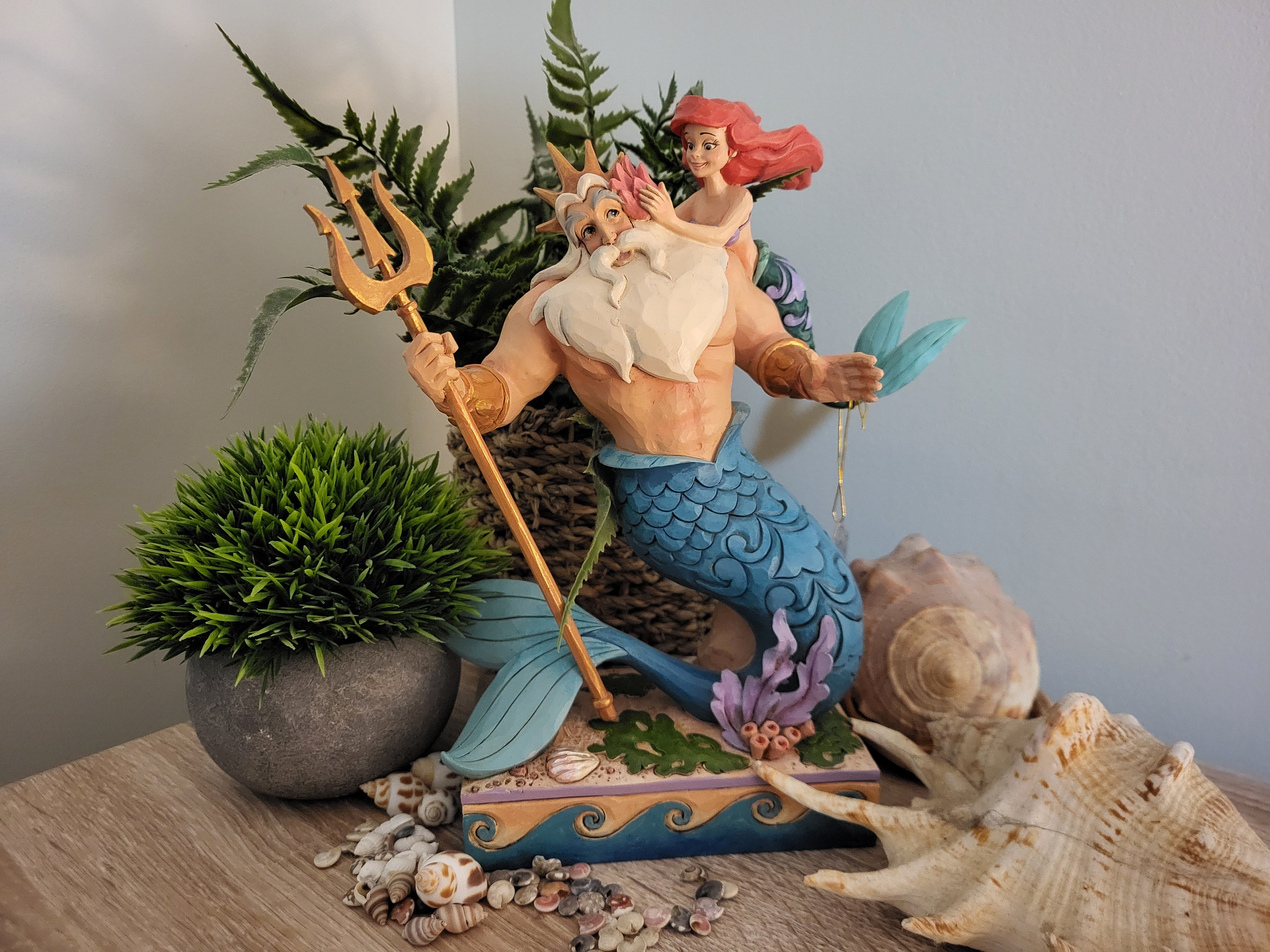
Triton’s Change Matters More Than His Power
King Triton’s greatest moment is not when he uses his trident. It is when he changes.
By the end of the story, Triton begins to understand that loving Ariel means letting her become who she is, even if it hurts him. That is a difficult lesson, and it is one of the reasons he remains such an important Disney father figure. And let's face it - when you comare Triton to some of the other Disney parents/step parents - Ariel could have had worse!
He does not become less protective. He becomes more selfless. He realises that Ariel’s happiness cannot come from obedience alone. It has to come from being trusted.
That shift is what softens the entire father-daughter conflict. The story does not pretend that Ariel and Triton were never hurt. Instead, it shows growth. Triton learns to listen. Ariel learns that her choices carry weight. Their relationship survives because both characters move beyond the roles they were trapped in: the rebellious daughter and the overbearing father.
Why Collectors Connect So Strongly With Ariel
Ariel has remained popular with collectors partly because she represents more than one thing at once. She is romantic, yes, but she is also curious, frustrated, brave and flawed. Her story contains beauty and tension.
That gives collectors plenty of emotional angles to build around. Some may prefer joyful Ariel pieces that focus on colour, music and underwater scenes. Others may be drawn to more character-led designs that reflect her longing, transformation or relationship with Triton.
This is where ranges such as Ariel Disney ornaments can work well for collectors who want to explore different sides of the same character. A single Ariel piece might capture her innocence. Another might show her confidence. Another might place her within the wider world of Atlantica, surrounded by characters who shape her story.
The most interesting collections often do more than gather similar-looking pieces. They tell a small story across a shelf.
Jim Shore’s Ariel Designs and Storytelling Through Detail
Disney Traditions pieces by Jim Shore are particularly interesting for character-led collecting because they often combine familiar Disney scenes with folk-art patterning, sculpted texture and expressive poses. With Ariel, that can help bring out both the fairytale beauty and the emotional side of the character.
Ariel’s flowing hair, mermaid tail, posture and facial expression all affect how a piece feels. Is she playful? Dreamy? Defiant? Peaceful? Those details matter because Ariel is a character defined by movement and emotion.
Collectors interested in this style may enjoy exploring Jim Shore Ariel figurines, particularly when looking for pieces that feel more story-driven than decorative alone.
Displaying Ariel and Triton as a Relationship, Not Just Characters
Ariel and Triton work beautifully in a display because they create contrast. Ariel brings youth, movement and curiosity. Triton brings authority, scale and presence. Together, they can make a display feel more complete.
A simple Ariel-only shelf can be charming, but adding Triton changes the tone. Suddenly the display is not just about Ariel’s dream; it is about the family conflict behind that dream.
For a more story-led display, collectors might group Ariel as a mermaid with Triton, Ursula, Flounder or Sebastian. This creates a stronger sense of the film’s emotional world: temptation, protection, friendship, danger and longing.
The key is not to overcrowd the shelf. Ariel and Triton need enough visual space to feel connected. Placing them too far apart can make the display feel random, while placing them together helps suggest the emotional pull between father and daughter.
Why Ariel's Story Still Stays With Us
Ariel and King Triton’s conflict still feels real because it is built around something timeless: the struggle between protection and independence.
Ariel wants to be trusted. Triton wants to keep her safe. Both love each other, but for much of the film, neither knows how to express that love in a way the other can accept.
That is why their relationship still matters to Disney fans and collectors. It gives The Little Mermaid emotional weight beyond the songs and spectacle. It reminds us that growing up often means being misunderstood, and parenting often means learning when to let go.
For collectors, Ariel and Triton pieces carry that meaning with them. They are not just figurines from a beloved film. They are reminders of one of Disney’s most recognisable family conflicts: messy, emotional, flawed and full of love.


